
Gaia: science essays
In these short (mostly 2-page, weekly) 'essays', I have picked out some of the scientific highlights of the Gaia mission as they are emerging, or as they caught my attention. They offer a somewhat chronological snapshot of some of the discoveries that Gaia is making across all of astronomy. I've also included some essays on related topics, including the history of astrometry, and some more technical, managerial, or developmental aspects of both the Hipparcos and Gaia missions. In each, I have included a footnote DR1, DR2, EDR3, DR3, etc to indicate which of the (latest) data releases the essay refers to (described in essays #10 and #76), with DR0 signifying technical or historical material not connected with any specific data release. Who are they written for? Anyone who might have a general interest in science and astronomy, including amateur astronomers, young scientists starting out on their careers, mid-career scientists looking in on Gaia for the first time to get a feeling of what is possible, and specialists looking in from different areas of astronomy, or physics more generally. Click on the access PDF icon to access the file. Only a few references are included, and these are 'discreetly' hyperlinked for those who want to read more... where references appear in the form (Einstein 1908) or www.gaia.com, clicking on the text (even though generally not highlighted!) should lead to the relevant online article. Essays 1-236 were published weekly, 237-241 monthly, and 242 onwards every two weeks. In a few cases, I've recorded an interview on the subject (see science interview page).
New: This table page lists all essays, updated to the end of June 2026 (1–235 inclusive), in tabular form. It includes a simple search on the title field.
New: These annual compilations are in both pdf and 'flipbook' form (open in new page; larger files as a download):
pdf:
flipbook:
New: The material in essays 1–239 is broadly included in my review "Space astrometry with Gaia: Advances in understanding our Galaxy" published in Physics Reports, Volume 1150, pp. 1–229 (January 2026): available here
New: This Gaia Science Tree (v4.0, June 2026) presents essays 1–235 (Jan 2021–Jun 2026) as a hyperlinked "mind map"
* all end-nodes are hyperlinked to the given essay number (links are to "legacy" copies at the CERN-Zenodo site)
* catalogue content topics are at top right, background material at bottom left, otherwise moving "outwards" clockwise in the diagram
* I have prepared this as a didactic tool. Please feel free to make use of it as you wish
I have converted Essays 1–130 into audio "discussion-type" podcasts, entirely using generative AI. They are available at my Gaia Essay YouTube channel, and I describe their construction in Essay 227.
Please make use of this subscribe page to receive an email (usually Monday) when each new essay is published
- 27Page 11
162. Cosmology with Gaia's quasars
Two topical tests of Lambda CDM cosmology
The large number of quasars measured by Gaia contributes fundamentally to the determination of the quasi-inertial reference frame. Today, Gaia's quasar survey is also being applied to two topical observational questions in Lambda CDM cosmology: the kinematic dipole anomaly, and the S8 tension.
5 February 2024

161. Strongly lensed quasars
A new search for gravitational lenses in the Gaia data
In this last of five essays on ESA's October 2023 'Focused Product Release' topics, I look at a new search for strongly lensed quasars in the data interval used for Data Release 3. Exploiting Gaia's 0.18 arcsec angular resolution, this new analysis found 450 previously known systems but with 86 newly detected components, and 381 new lensed candidates.
29 January 2024

160. More on diffuse interstellar bands
Spatial distribution of these absorption features out to 4000 parsec
In this fourth of five essays on ESA's October 2023 'Focused Product Release' topics, I look at improved modelling of the two diffuse interstellar bands (DIBs) present within the wavelength range of Gaia's Radial Velocity Spectrometer instrument (845-872 nm). Six million RVS spectra have been used to map their spatial distribution out to 4000 parsec.
22 January 2024

159. Improved solar system astrometry
A dramatic improvement in orbits for 157,000 asteroids
In this third of five essays on ESA's October 2023 'Focused Product Release' topics, I look at the significant improvements in orbit determination for the 157,000 asteroids provided in DR3, but now exploiting the 66-month time interval that will form the basis of Data Release 4 in 2025. This is mainly due to the observations now extending beyond a typical orbital period.
15 January 2024

158. Radial velocity time-series of LPVs
New insights into long period variables and ellipsoidal variables
In this second of five essays on ESA's October 2023 'Focused Product Release' topics, I look at the application of the newly available radial velocity time-series measurements (from Gaia itself) to the class of long-period variables. The time series data provide a powerful complement to the epoch photometry in identifying and characterising LPVs.
8 January 2024

157. Many more Gaia sources in Omega Cen
More than half a million new sources in this globular cluster
In essay 40 I described the first Gaia-based estimates of the distance to the globular cluster Omega Cen. Gaia DR3 contained 321,698 cluster sources. A series of special observations, and part of ESA's October 2023 'Focused Product Release', results in a further 526,587 sources in its core region. I also summarise other results on Omega Cen to date.
1 January 2024
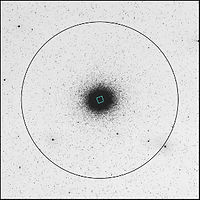
156. Update on stellar streams
Nearly 100 stellar streams now know in the Galaxy halo
A growing number of accreted stellar 'streams' are being identified in our Galaxy's halo, from 20 in 2016 to nearly a hundred today, now mostly coming from Gaia. Some are attributed to captured dwarf galaxies, others to disrupted globular clusters. I described some of the early discoveries in essays 15 and 71, and bring the subject more up-to-date here.
25 December 2023

155. Gaia satellite operations
An insight into the complexities involved
Ten years on from the launch of Gaia, on 19 December 2013, I provide a picture of the tasks involved in the operations of the Gaia satellite. I will start with a brief background to some of the top-level requirements that influenced the operational design and implementation, and continue with a first-hand account by the Gaia spacecraft operations manager, David Milligan.
18 December 2023

154. Hipparcos: from concept to launch
Some more history of space astrometry
In essay 4 (25 January 2021), I gave a historical perspective on the early days of the Hipparcos mission and the 'push to space'. Here, I resume this historical and somewhat personal account describing the journey from the early concepts of Hipparcos to its launch in 1989. I describe how the various teams were organised, and some of the challenges that we faced.
11 December 2023

153. The solar motion
New approaches to measuring this fundamental quantity
Gaia represents a major advance in understanding our Galaxy's disk and halo kinematics. Here, I will look at the specific problem of determining the 'solar motion'. I explain what it is, why it is important, and how it is determined. As well as the more classical approach, methods are being developed to measure all three components with respect to the halo.
4 December 2023

- 27Page 11